A Sprinkler Check Worth Running Before a Georgia Summer
Most sprinkler problems hide underground or behind a controller, and a lawn shows them long before a bill does.
October 20, 2026 · 4 min read
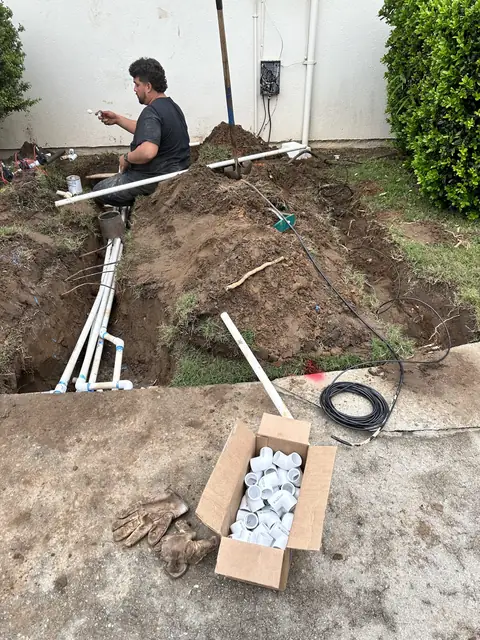
A sprinkler system can look like it is running while half the yard goes without water. The controller clicks, a few heads pop up, and nobody walks the whole thing. In spring the rain covers for a weak zone. Once the Georgia heat arrives and the lawn depends on irrigation, the same hidden fault turns into dead grass in days. A walk-through before the hot months costs a lot less than replacing sod in August.
What one repair visit actually found
On one irrigation repair call in Warner Robins, the crew replaced a sprinkler control panel, located and replaced two broken underground pipes, swapped four bad sprinkler heads, and re-aligned the heads that still worked. The crew was on site about three hours, on the same day the call came in. It is a useful example because none of those problems is rare. The control panel, the buried lines, and the heads are the three places a system fails, and one visit found something wrong in all three.
How a system fails
A control panel can fail without anyone noticing. It may stop running a zone, or run it at the wrong time, while the rest of the system carries on and looks fine. A broken pipe underground is worse because it is invisible by definition. Water finds the break and escapes there, and everything downstream gets a fraction of what it should. Heads wear out too. They crack, clog, stick halfway up, or get knocked off alignment by a mower, and a head aimed at the driveway or the siding waters concrete while the grass six inches away goes dry.
A zone-by-zone walk
Pick a morning, run the system by hand, and watch each zone for a full cycle instead of a few seconds. Some failures only appear after the line has been under pressure for a minute or two. Go slowly, and take a phone to photograph anything odd so you can describe it later. A short note about which zone number and which corner of the yard saves a lot of guessing when someone else has to find the problem.
- Every head in the zone pops all the way up and drops back down when the zone stops
- Spray reaches the grass and not the driveway, the siding, or the street
- No head is leaking at the base or spitting a weak, uneven stream
- No wet, soggy, or unusually green strip appears in the lawn, which can mean a leak below
- The controller keeps its schedule after a storm or a power flicker
- Any patch that stays brown while the rest of the yard greens up gets noted and checked
Why the underground part matters most
Pipe breaks come from tree roots pressing on lines, soil settling, or digging for a fence post or a new bed years after the system went in. None of that is visible from the surface. The first sign is usually a wet spot that does not match the weather or a brown patch that will not recover, and by then the leak has often been running for a while. Running each zone and watching for pooling is the closest thing to catching it early without digging up the yard.
Water at the right time and in the right amount
Even a perfect system can be set up badly. A schedule programmed when the system went in rarely fits how the yard has changed since. Trees grow and shade a zone that used to bake. A bed gets added and takes over a spray line. Grass does better with deep, occasional watering than with a short pass every day, so a run time that looked right years ago can now be too much on one zone and too little on another. Early morning is generally the best time to run a cycle, since less water is lost to heat and the lawn dries before evening. Walk the yard again after a few weeks of summer weather and ask whether each zone still matches what it is watering today, not what it watered the year the system went in.
New beds and new construction
Irrigation work is not only repair. A.P. Lawncare also installs sprinkler systems, which means trenching and assembling PVC lines and manifolds, and a trench is the best time to think through what the yard will need. Planning zones around sun, shade, and bed edges at the start is far easier than fixing them after the sod is down. If you are finishing a backyard, plan the irrigation before the final grading and planting, not after.
If a zone is not working, a head is damaged, or you simply want the whole system checked before summer, call A.P. Lawncare & Pressure Washing at (478) 334-1049. See the sprinkler page for the work the crew does, and describe what you are seeing: which zone, which part of the yard, and whether the problem is a dry patch or a wet one.
A.P. Lawn Care & Pressure Washing LLC, (478) 334-1049
Call (478) 334-1049More articles
A Warm-Season Lawn Calendar for Middle Georgia Yards
A warm-season lawn runs on its own calendar, and a northern schedule is how good grass ends up thin.
Why Your Siding Turns Green in This Humidity
The north side of the house is not cursed. It just stays wet longer than the rest.